
Best Price Cancer Treatment
Best Price Cancer Treatment: Cancer Surgery Site
The best priced skin cancer treatment in India
How much does skin cancer treatment cost with top hospitals and top surgeons in India?
- The average cost of treating skin cancer in the West is very high.
- India is known worldwide for its advanced medical facilities and promising technologies for the treatment of skin cancer. Many of the best hospitals for skin cancer treatment can be found in India.
- The treatment cost of skin cancer is much less than other countries in India. Also the cost of skin cancer treatment in India is quite low as compared to other developed countries.
Different decision factors can determine the cost of skin cancer treatment in India. These can be broadly classified as hospital, medical team or patient dependent factors.
Hospital factor
- Type of Hospital (Government / Trust / Private).
- Insurance use, insurance type or self pay.
- Recognition of benefits
- Hospital honors and brand value.
Medical team factor
- Diagnosis of the patient
- The general health of the patient
- Room section selected by the patient
- Other treatment is required by the patient
The average cost of skin cancer treatment across the top 15 cities in BDT is as follows:
| City | Minimum cost | Bhatya | Maximum cost |
|---|---|---|---|
| Bangladesh | 1,90,000 | 2,65,000 | 3,40,000 |
| Mumbai | 2,00,000 | 2,75,000 | 3,50,000 |
| Chennai | 2,25,000 | 3,00,000 | 3,75,000 |
| Bangalore | 2,10,000 | 2,90,000 | 3,60,000 |
| Hyderabad | 2,50,000 | 3,25,000 | 4,00,000 |
| Ahmedabad | 2,75,000 | 3,50,000 | 4,25,000 |
| Nagpur | 1,75,000 | 2,50,000 | 3,25,000 |
| Pune | 2,00,000 | 2,75,000 | 3,50,000 |
| Gurugan / Gurugram | 1,90,000 | 2,65,000 | 3,40,000 |
| Calcutta | 2,75,000 | 3,50,000 | 4,25,000 |
| Chandigarh | 2,00,000 | 2,75,000 | 3,50,000 |
| Jaipur | 2,50,000 | 3,25,000 | 4,00,000 |
| Noida | 1,90,000 | 2,65,000 | 3,40,000 |
| Kerala | 2,75,000 | 3,50,000 | 4,25,000 |
| Goa | 2,50,000 | 3,25,000 | 4,00,000 |
Our hospital network and surgery group are available in 15 cities in India for access to our patients. Please fill out the form for a free feedback from our expert team. We will get you free surgeons in India and free from the best hospitals in India, no responsibility feedback. No charge paid
All special services are available in packages available for international patients
Introduction
Skin cancer is a common and locally destructive growth of skin cancer. It originates from cells that line along the membrane that separates the upper layer of skin from the deeper layer. Unlike malignant malignant melanoma, this enormity of skin cancer is largely due to the limited possibility of metastasis and life-threatening.
More than 5.4 million cases of non-melanoma skin cancer are treated among 3.3 million people each year in the United States. Every year, there are more new cases of skin cancer than the combined incidence of breast cancer, breast, lung and colon. One in five Americans will develop skin cancer in their lifetime.
Types of skin cancer
- Actinic keratosis (single): Early growth of dry, flaky patches or spots. Clean-skinned people get most of them at the age of 40. This is why it developed a few years after the sun's exposure. Typically, they form the skin that gets as much sun exposure as the head, arms, neck and forearms. Treatment is important after progressing to one of the skin cancers called skimous cell carcinoma (SCC).
- Basal cell carcinoma (BCC): The most common type of skin cancer that develops frequently with clear skin but can also occur in people with dark skin. It looks like a flesh-colored, pearl-like vapor or pink patch of skin that develops after frequent sun-exposure or indoor tanning. They are more common on the head, neck, arms and can form anywhere on the body cells, chest and legs. Early direction and treatment of BCC is important because it can invade surrounding tissue and grow into bones and nerves, causing damage and disintegration.
- Squamous cell carcinoma (SCC): This is the second most common type of skin cancer that people with light skin are more likely to develop, but they can develop in people with darker skin. Often it looks like a red firm compression, scaly patch or healing that is a scent and then reopened. It forms on the skin that receives frequent sun exposure such as the face, ears, neck, chest, back and arm rims. It can also grow deep into the skin and cause damage and discoloration. Early diagnosis and treatment prevent this and stop it from metastasizing.
- Melanoma: This is the most deadly form of skin cancer that often develops into a rash or suddenly emerges as a new dark spot on the skin. Early diagnosis and treatment are important. Warning melanoma warning signs can help you find early melanoma.
Risk factors
The most common risk factors for skin cancer are:
- The sun shines in the sunlight, especially the UV-B rays from the bed.
- A chronic immune system from HIV / AIDS infection or cancer or some underlying disease such as some medications such as chemotherapy or prednisone
- Patients with previously diagnosed melanoma are at increased risk, about 5-10% will develop a second primary
- Ionized radiation (X-rays) or chemicals that are known to predict cancer, such as arsenic.
- Genetics may play a role- at least one affected first degree relative has a high probability of developing malignant melanoma.
- Specific types of sexually transmitted wart virus infections
- Older patients have more skin cancers
| Symptoms |
BCS is present in most cases if there are any symptoms when SCC can be painful. Both forms of skin cancer can be seen in a sore that will not heal oozes, bleeds, crusts or otherwise. They start as a slowly growing bug on the skin which can bleed after minor injuries. Both types of skin cancer can raise the edge and a cen inflammation.
- Symptoms of BCC include:
- Wounds of pink skin growth or crusted borders in the center
- A glossy pink, free, red or covered hesitant look
- A white, yellow or candle area that has a poorly defined border that can look like a stain
- Red patches of skin that may be crusty or itchy but usually it is not painful
- Symptoms of SCC include:
- Open sores that don’t go away for weeks
- Permanent, flaky red patches with irregular borders that can bleed easily
- Grow like a wart
- A raised growth with a rough surface which is indented in the middle
Diagnosis
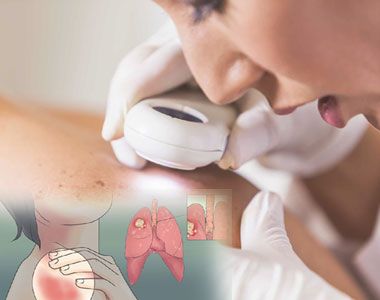
According to the American Cancer Society, ABCDS provides a simple guide to early melanoma warning symptoms. It should be suspected of any skin lesions with asymmetric, it has an irregular border, which is variegated or dark in color, it is larger or higher than 6 mm in diameter.
A skin test by a dermatologist is the best way to make a definitive diagnosis of skin cancer. In most cases, a single appearance is enough to diagnose it. Usually a skin biopsy is used to suspect skin cancer. The partial area of the tumor beneath the tumor such as lidocaine and a small portion of the tumor is cut and sent to the patient for examination, it works by covering the tumor, showing the tissue under a microscope based on the diagnosis based on its characteristics.
Presenter
Tells you how big it is at a cancer stage and how widespread it is. This will help the doctor determine what treatment you need. Your doctor will perform several tests on your cancer periodically. Most BCCs do not require staging because it is very rare for them to spread. They will only stage when they are big. For staging SCCA they can probably spread, although it is still rare. Doctors can use TNM (tumors, nodes, metastases) systems in your cancer periodically.
- Stage 1: Also called basin disease or casinoma. The cells have started to turn into cancer but have not yet spread to the surrounding areas of the skin. If left untreated, Bowen's disease can develop into SCC. Therefore, your doctor may describe this stage as pre-cancer or pre-dangerous.
- Stage 2: The cancer is about 2 centimeters or less and has 1 or higher risk characteristics. High-risk features mean the cancer is 2 mm thick, grows in the lower dermis, begins in the space around a nerve, ear or lip, and appears very abnormal under a microscope.
- Stage 3: The cancer has a risk of more than 2 centimeters or two or more.
- Stage 4: The cancer spreads to the bones around the mouth, the jaw bone, or the lymph nodes located near the same side of the body that is less than 3 centimeters.
- Stage 5: The cancer has grown in the lower part of the ribs, spine, or forehead, or has grown into a lymph node that grows to more than 3 centimeters or so in the internal organs of the lungs.
Environment
Will be treated by a skin cancer specialist. You can see an oncologist or oncologist. If your tumor has undergone surgical surgery, you can see a plastic or reconstructive surgeon to restore the appearance of skin on the face after the tumor is removed, depending on how much skin is removed.
There are different types of skin cancer treatment in India. The choice of therapy depends on the size and location of the tumor, the microscopic features of the cancer and the general health of the patient.
Topical Medications: In the case of superficial BCS, some gels, creams, and solutions may be used that stimulate the body's immune system, causing it to produce cancer and fluorouracil (5-FU), a chemotherapy drug-treated interferon.
Some patients do not experience any side effects but others may have inflammation, redness and irritation. An error is that there is no tissue left to test whether the tumor has been completely removed.
Destruction by Electrodesection and Curvature (EDC): The tumor area is taken with the local tumor and repeatedly scraped with a sharp instrument, curette and the edge is cauterized with an electric needle. Advantages It is easy, fast and relatively inexpensive. The difficulties are somewhat vague and the rotation rate is as high as 15%.
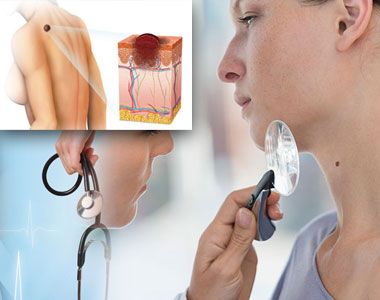
Surgical excuse: The area around the tumor is narrowed with local anesthetic. A football-shaped portion of the tissue with the tumor is removed and then the wound edges are closed with a needle. For very large tumors a skin graph or flap is needed to close the defect. The benefits are that there are more than 90% healing rates; The surgical specimen has been successfully removed from the entire tumor and the erosion produced can often be tested to ensure that it is more cosmetically acceptable than the EDC method.
Mohs micrographic surgery: This site is locally anesthetized and the surgeon removes the visible tumor by a small margin of normal tissue. It will be immediately evaluated under a microscope and the area that shows the residual microscope tumor involvement is re-excised and the margins are re-examined. This cycle will continue until no more tumors are seen. It is a more complex and expensive alternative to treating tumors where normal tissue preservation is essential, where tumor margins are poorly defined and tumors that have been previously treated and reconsidered and are in certain high-risk tumors.
Radiation therapy: About ten to fifteen treatment sessions will provide higher levels of radiation to the tumor and the smaller radiation to the radiating skin area. It is useful for candidates for any surgical procedure. There are no cuts involved in the benefits. The disadvantage of this expensive option is that the treatment area cannot be sure when the tumor is completely gone and the radiation scars can get worse over time. So it is usually reserved for elderly patients.
Other types of skin cancer treatments include photodynamic therapy (PDT) which includes drugs and blue light used to destroy cancerous tissue, cryosurgery where the tissue is frozen and destroyed, laser surgery or binding to the top layer of skin and wound and oral medicine.
Follow up care
It is important to examine your skin and learn how to protect yourself from the sun. Contact your GP or specialist if you spot any signs of other skin cancers during the checkup.
Our treatment patient in Canada Mrs. Gracie Watt is experiencing the experience of getting skin cancer treatment in India.
Mrs. Gracie White from Canada
Like the mother of a 5 year old girl who rarely understood the meaning of cancer, I was really worried that she would not be able to cope in the pressured environment of the hospital and my husband would be too tired to manage financially, work, baby and all my treatment at the same time. But the moment I was admitted to the hospital for treatment of my skin cancer in India, half of my anxious staff became unfamiliar with the way they treated patients and their families. My daughter and I had to feel so easily that I didn’t even understand how the days of treatment and recovery were going and all the credit for that goes to the Indian Cancer Surgery Group.
Who is the top cancer specialist in India?
- Dr. VINOD Rena
- Dr. (Call.) And Ranga Rao
- Dr. Orchit Pandit
- Dr. MA Raja
- Dr. Rangarju Ranga Rao
- Dr. Amit Orbal
- Dr. Rajesh Minister
- Dr. Manish Jashi
- Dr. Sanjay Singh Ng
- Dr. Sudhir Tommy
Which is the best hospital for skin cancer in India?
- Medina- Medicine, Gurugan
- BLK Super Specialty Hospital, New Delhi
- The highest recommendation hospital New Delhi
- Indrasta Apollo Hospital New Delhi
- Kokilin Dhirukhi Ambani Hospital, Mumbai
- Fort Memorial Research Institute, Gurugan
- Fortis Memorial Research Institute (FMRI) Gurugan
- Artemis Hospital, Gurugan
- HCG Hospital, Bangalore
- Fort Hospital, Noida
- Jaipur Hospital Noda
- Bangalore of Manipur Hospital
- Fortis Assoster Strike Institute, New Delhi
- Pushpati Singhania Research Institute, New Delhi
- Narayan Multipacity Hospital, Bangalore
- In recent years, India has emerged as a medical center for finding affordable, accessible and effective low cost skin cancer treatments.
- Some of the best skin cancer treatment hospitals in the world are available. The cost of treating squamous cell carcinoma in India is relatively affordable compared to health care facilities.
- Helps to improve the chances of successful outcome of skin cancer test in India for early diagnosis, surgery or treatment.
- In the last 5 years, the number of patients has increased by an average of 15 to 20 percent per year.
- Indian Skin Cancer Treatment Hospitals provide advanced cancer care and the highest quality services with superior infrastructure and best priced skin cancer treatments.
Here are the approximate statistics of patients undergoing skin cancer treatment in India in the last 5 years.

Please consult with us to get free quotes for skin cancer treatment, best feedback from top hospitals and best surgeons in India.

No comments